Building literacy around pornography: Top tips for educators
The ‘porn panic’
Talking about porn has changed a lot since we first set up SB in 2019.
In the last few years, we’ve seen the sharp effect of misogynistic influencers, the rise of AI-generated content and the headlines about the 2025 Age Verification law. We understand why people are feeling panicked about the impact of the ever-expanding and evolving digital world on young people today.
But at Split Banana, we know that when it comes to RSE, restriction is rarely protection. And sometimes, it can just provide an illusion of safety.
Since the Age Verification law has come into place, many young people have told us how they are getting around it (VPNs, fake accounts…you name it!). When a ban is put in place, we don’t stop them from seeing porn, we just risk stopping them from talking to us about it.
And we’re seeing a global trend - from Australia’s social media ban to the UK’s focus on smartphone-free childhoods - to suggest that the only way to keep young people safe is to keep them off the internet. But who gets to decide what is ‘harmful’ and at what cost?

The internet is often the biggest source of people’s knowledge of sex and relationships
From banning to building
We aren’t denying that porn can’t be harmful.
But our main priority isn’t to label it as ‘bad’ and make it taboo. Instead, we intend to open up a conversation about it: to support young people to reflect on how they feel when they come across harm (which the Children’s Commissioner’s report has shown they will) and how they might take steps to prevent this in future. To give them tools to critically analyse, dissect and take action.
If we take an entirely anti-porn stance, we risk infringing on young people’s rights to privacy and information. More importantly, we risk silencing the very people who need to be heard.
If a student feels judged for what they have seen, they won’t ask for help for something that scares or confuses them - like the rise in mainstreamed strangulation, sextortion or AI-generated Image Based Sexual Abuse (IBSA).
The Safe Uncertainty approach
At SB, we look to the amazing folks at Re-imagining RSE who are doing fantastic research in this area, and sharing their tools with the RSE community.
Safe Uncertainty is the idea that we don’t have to have all the answers (we never will, the internet moves too fast!). Instead of trying to know everything, we aim to build young people’s critical media literacy and give them a space to unpack things they might have seen (voluntarily or involuntarily - no judgement either way).
Instead of a lecture on ‘why porn is bad’, we use facilitation visuals and open dialogue to ask:
Who made this?
Who is making money from this?
How does power and gender influence what we are seeing?
How might different people in this situation feel?
What are the choices they have?
How might this impact people’s relationships with their own bodies and each other?
Whilst ensuring they know what the law is surrounding consent to sex and sharing imagery.
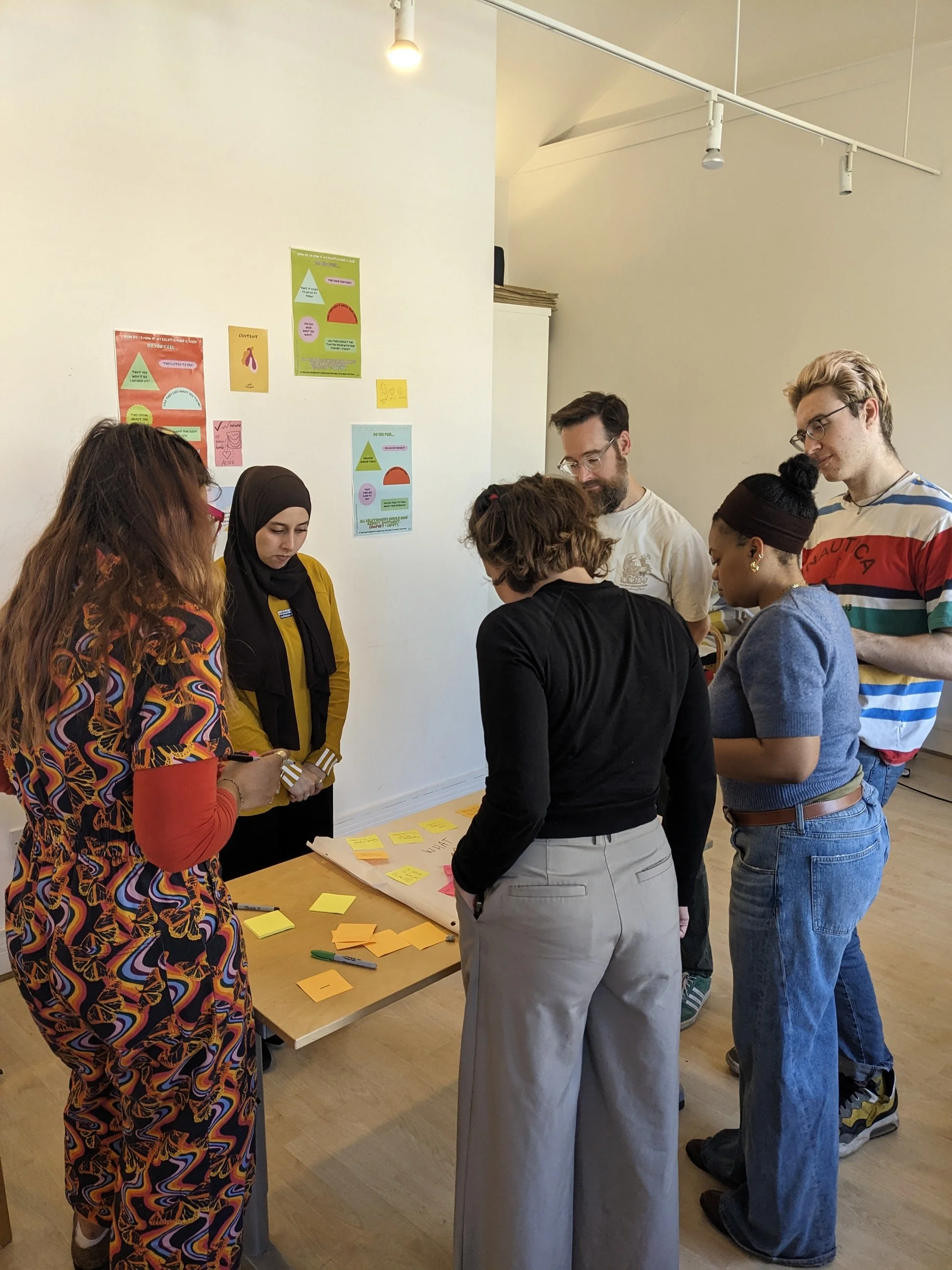
Learning about facilitation techniques with our expert facilitation team
Train with us
This summer, our How To online taster training sessions are responding directly to the challenges that teachers have shared with us.
They are designed to move from crisis management to proactive education, aligning with the latest Violence Against Women and Girls strategy and new 2026 RSE statutory requirements.
Our How To training sessions are for anyone working with young people: teachers, youth practitioners, healthcare professionals, social workers.
Our upcoming training How To: Build Literacy around Pornography on Wednesday 22nd April 15.30-17.15 isn’t about being ‘pro-porn’ or ‘anti-porn’. It’s about being ‘pro-student’. By moving away from fear-based messaging towards skills to help you facilitate meaningful discussions which will help young people build criticality, empathy and consensual communication.
Our training is grounded in 7 years of facilitation experience and has been co-designed with our wonderful Youth Advisory Group to ensure that it is relevant to the needs of young people today.